A great pitch gets attention. A playable demo earns a real evaluation
A deck can earn attention, but publishing and fundraising conversations need proof. Sail.Game structures the match; Playruo makes the follow-up playable from the browser.
 Playruo Editorial TeamUpdated July 15, 20265 min read
The pitch is only the first filter
A strong pitch can make someone stop scrolling. It can explain the market, the team, the genre, the budget, the roadmap, and the reason this game should exist now.
But for a game demo for investors or publishers, the pitch is rarely the final proof. It is the first filter.
That matters because funding and publishing are not abstract problems for most studios. GDC's 2025 State of the Game Industry survey found that 56% of developers self-funded their games, while 28% pursued publishing deals or project-based funding. The same report described external funding as difficult, with friction around timing, market instability, lack of connections, discrimination, creative conflicts, and competition.
A deck can frame the opportunity. A trailer can create energy. A call can answer questions.
But at some point, a publisher or investor wants to know how the game feels.
That is why the best pitch conversations usually need both structure and play. The deck gets attention. The playable demo gives reviewers something concrete to test.
What Sail.Game solves
Sail.Game helps studios prepare the structured side of the pitch.
Instead of treating outreach as a cold list and a PDF, Sail.Game gives studios a Game Card: a structured profile for the project, the team, the stage, the budget, the platform plan, and the opportunity. Its public positioning includes AI guidance, expert human review, criteria-based matching, and direct relationships with a qualified publisher network.
That matters because the right introduction is not just "a publisher interested in games." It is a publisher or investor whose criteria fit the game in front of them.
Sail.Game's matching looks at practical signals such as genre, budget, platform, timeline, project stage, and publisher criteria. That makes the first conversation more relevant.
It does not guarantee a deal, and studios should not expect any platform to do that. The useful boundary is narrower: better structure, better fit, and better introduction quality, without pretending the platform can create publisher appetite by itself.
The gap after interest
The next problem starts after someone says: "Interesting, can I try it?"
That moment is fragile.
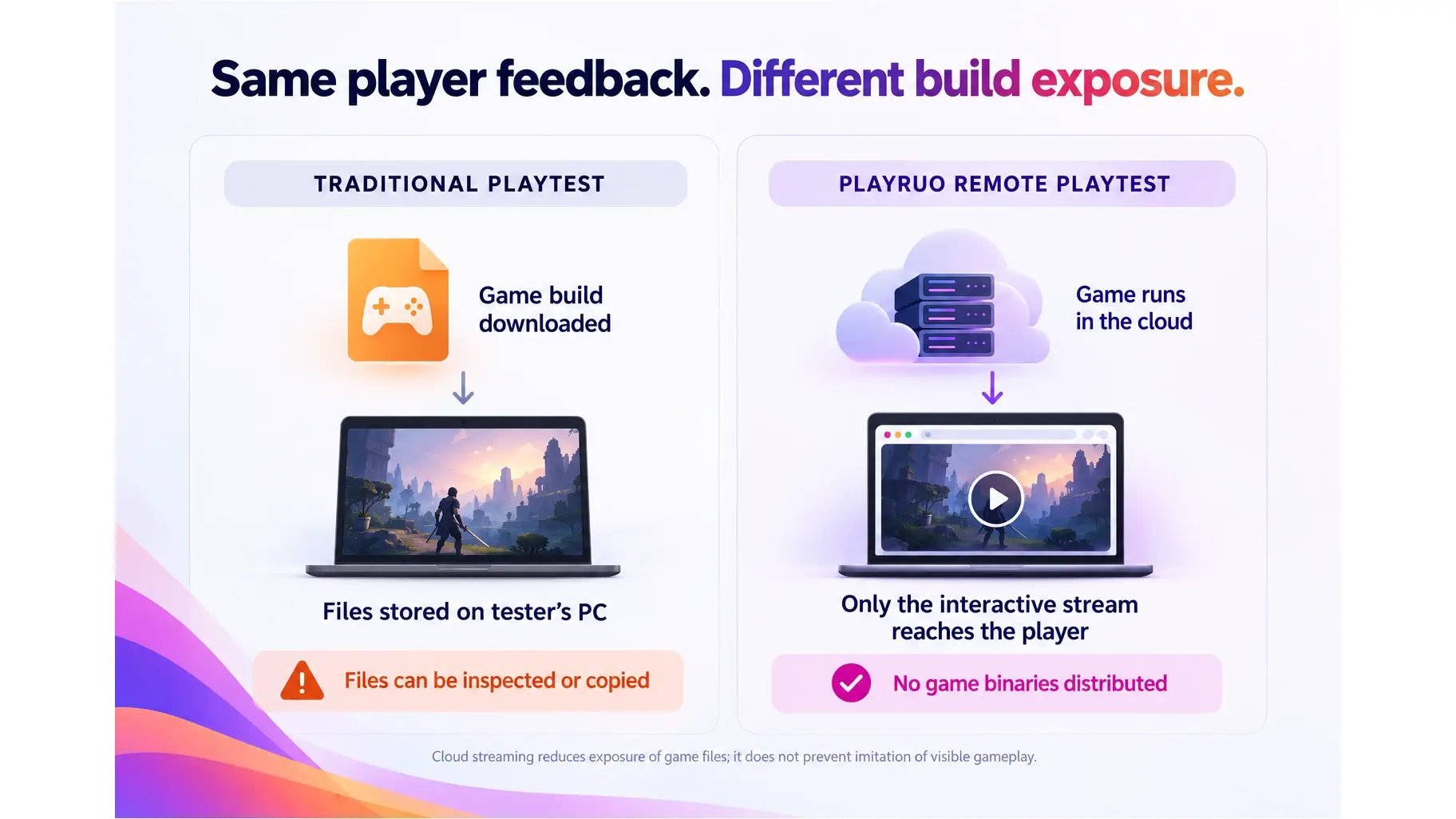
If the studio sends a large build, the recipient may need the right PC, the right launcher, the right account, the right controller, the right OS, and enough time to install everything. If the game is early, the studio may also worry about uncontrolled file sharing, expired builds, footage leaks, or access staying open after the conversation moves on.
For a game pitch demo, friction changes behavior. The person may still be interested, but the demo slips behind other work. A playable follow-up becomes another task.
This is especially costly during fundraising or publishing outreach. The deck helped create attention. The next step should reduce effort, not add a setup checklist.
What Playruo adds
Playruo turns an existing build into a secure browser-playable link.
The recipient does not need to download the game, install an app, create an account, or own a gaming PC. They open a modern browser and play from the link. This makes the pitch more accessible to people reviewing from a MacBook, a work laptop, or a machine that would not normally run the build.
For the studio, Playruo works with the build as-is. There is no SDK, no porting, and no code change required. A studio can use a Steam-based setup when relevant, or use direct build upload.
The game stays server-side. Playruo runs it inside encrypted virtual machines with strict game isolation and a Windows kiosk environment. Playruo does not place game files on the recipient's device. The browser receives a video stream only.
Studios can also use gated access, including password protection when relevant, plus access windows, session duration caps, concurrent session limits, and instant revocation. For a playable pitch deck or game fundraising demo, that control matters as much as convenience.
How the combined flow works
Sail.Game helps the right people understand why the game deserves a conversation. Playruo helps them experience the game without adding setup friction.
| Stage | Sail.Game role | Playruo role | Useful signal |
|---|---|---|---|
| Project structure | Helps the studio shape a clear Game Card | Prepares the build access path | The opportunity is easier to evaluate |
| Matching | Matches by genre, budget, platform, timeline, stage, and publisher criteria | Creates a controlled browser-playable link for qualified recipients | The follow-up fits the recipient |
| First interest | Supports a relevant introduction | Removes download, install, account, and hardware barriers | The recipient can try the game sooner |
| Demo review | Gives context around the project and team | Streams the build from an isolated virtual machine | Reviewers judge the game from actual play |
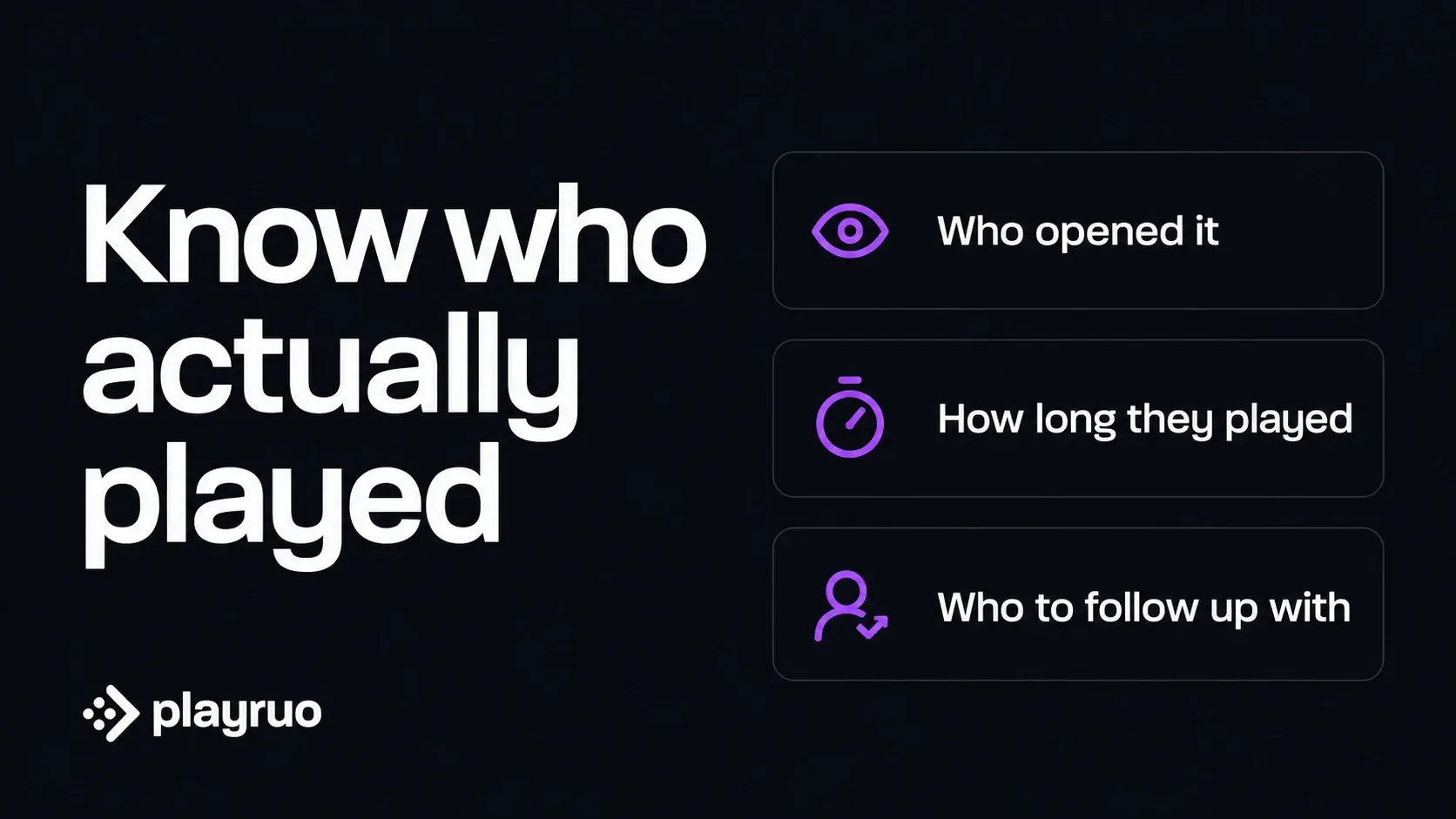
| Follow-up | Keeps the pitch structured | Provides session count, duration, completion rate, timestamps, geography, play patterns, device data, and connection data | Engagement signal, not commitment |
This combined flow is not about replacing the deck. It is about making the next step easier to act on.
When a publisher or investor asks to see the game, the studio can send a controlled link instead of asking the recipient to install a build.
Preparing a publisher or investor follow-up? Make my demo pitch-ready
What studios get
Studios get a cleaner path from interest to play.
A pitch can stay structured through Sail.Game, while Playruo's browser access model makes the demo easier to access. The studio does not need to rebuild the game for the web, create a special browser version, or ask the team to integrate an SDK.
The practical benefits are direct:
- A secure browser link for an existing build
- No download, no account, and no app install for recipients
- No recipient hardware dependency beyond a modern browser and stable connection
- Support for a Steam-based setup when relevant and direct build upload
- Gated access, including password protection when relevant, plus access windows, session caps, concurrent limits, and revocation
- Server-side execution, encrypted virtual machines, strict isolation, and no local game files on recipient devices
- Analytics that help the team understand whether the demo was opened, played, and completed
That last point needs careful wording. Session data is not a promise of interest, funding, or intent. It is an engagement signal.
For a studio preparing to show a game to a publisher or investor, that signal still helps. It tells the team which follow-ups deserve context, how long reviewers played, whether sessions completed, and where the pitch may need a clearer next step.
What publishers and investors get
Publishers and investors get a lower-friction way to evaluate the playable part of the pitch.
They can review the Game Card, understand the context, and open the demo without waiting for a download or finding a compatible device. That changes the practical shape of the follow-up.
Instead of "I'll install this later," the next step can become "I'll try this now."
They also get a more consistent review environment. The game runs from controlled infrastructure rather than an unknown local setup. That does not remove the need for deeper due diligence, production review, or commercial negotiation. It simply makes the first playable check easier.
For publishers, that can help triage more projects without adding install overhead. For investors, it can make a creative and technical pitch more tangible.
Make the next follow-up playable
A great pitch gets attention. A playable pitch gives that attention somewhere useful to go.
Sail.Game helps studios structure the project and reach more relevant publishing or investment conversations. Playruo helps the studio turn the demo follow-up into a secure browser session, with no download, no install, no account, and no gaming PC required.
That combination is practical because it respects how pitch review really works. People are busy. Devices vary. Early builds are sensitive. Interest fades when the next step is heavy.
The goal is not to guarantee a deal. The goal is to make the game easier to evaluate when interest is already there.

FAQ
Sources
| Source | Notes |
|---|---|
| Sail.Game official site | Official Sail.Game positioning, Game Card, publisher matching, and qualified publisher network. |
| Sail.Game pricing and FAQ | Sail.Game FAQ and partner-fit framing, including the no deal guarantee boundary. |
| Playruo Pitch your Game | Playruo pitch-ready playable link positioning for publishers and investors. |
| Playruo technology | Playruo browser streaming, no-install access, virtual machine, security, and streaming architecture details. |
| Why Playruo | Playruo positioning for helping games find and qualify audiences through playable access. |
| GDC 2025 State of the Game Industry | Developer funding data and external funding challenge context. |
| GDC 2025 report landing page | Official landing page for the GDC 2025 State of the Game Industry report. |
| Little Polygon indie game pitching guide | Practical publisher pitch guidance on demo plus deck expectations. |
| GameDesignSkills game pitch guide | Publisher-side pitch guidance from Johan Toresson, Head of Scouting at Raw Fury. |
Related resources
More Playruo guidance connected to this topic.