How Remedy scaled CONTROL Resonant playtesting without distributing the build
 Playruo Editorial Team

- An international study focused on the early player experience
- Keeping build access controlled and individually traceable
- Four days to play on a schedule that worked locally
- Opening recruitment beyond Windows gaming PCs
- Connecting session context with Remedy’s own telemetry
- Screening participant setups before the playtest
- A clearer understanding of existing friction
- Building on the study
- Make playtesting a standard workflow for development and go-to-market
Results snapshot
TL;DR
- With Playruo, Remedy brought CONTROL Resonant research to hundreds of players across continents while keeping the confidential build server-side.
- Participants had a four-day access window, an allowance of up to five hours and persistent saves. Ten percent accessed from a Mac.
- Feedback from an international player pool helped Remedy better understand known friction points in the player experience.
Remedy Entertainment wanted to run an international CONTROL Resonant study involving hundreds of players. The aim was to revisit combat, the opening experience and progression while keeping its confidential build off participant computers.
Playruo provided browser access to a build running on cloud infrastructure. Over a four-day window, participants could use an allowance of up to five hours at times that suited them, return to their saves and contribute to Remedy’s research.
The study brought together international access, continuity between sessions and individual player identification. It also let participants join from a Mac without running the build locally.
An international study focused on the early player experience
Remedy had already run numerous playtests of CONTROL Resonant. At this advanced stage of development, the team wanted to reassess combat, examine the early part of the game and understand how players navigated and progressed through the experience.
The study called for a large group of players recruited across countries and continents. Remedy’s User Research team used FirstLook to manage its playtester panel and invitations, bringing recruitment and build delivery together around the study’s requirements.
The challenge was to deliver that scale while preserving the research requirements: time to explore, continuity across sessions, identifiable participants and a confidential build that stayed server-side.
Keeping build access controlled and individually traceable
Remedy already had a policy of keeping unfinished builds off participants’ computers, including with its existing Parsec workflow.
→ Playruo allowed the team to retain that policy for this much larger international study.
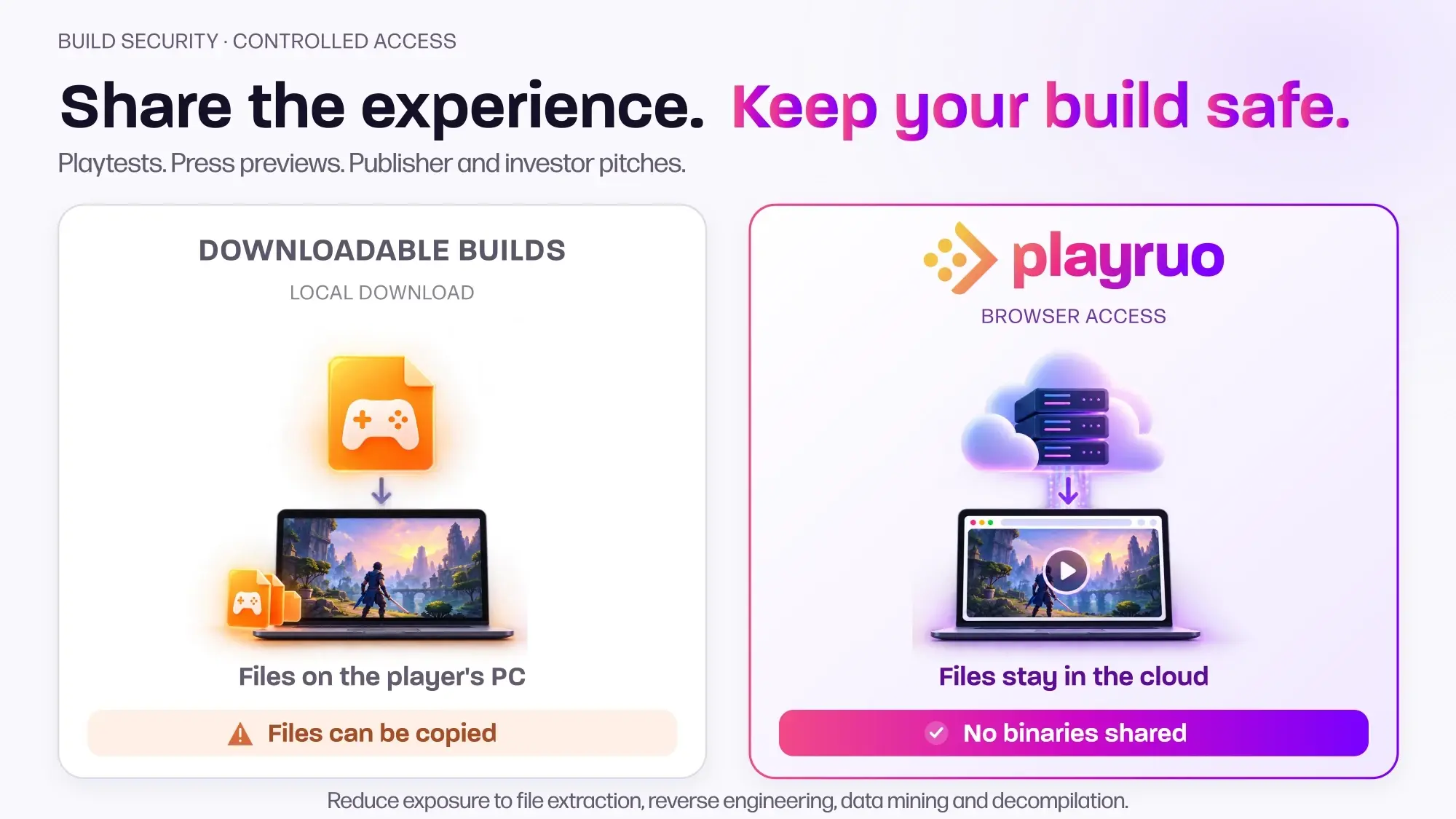
Participants used a dedicated access address, with entry restricted to an email whitelist and verification of the invited email address. The build remained on cloud infrastructure, while the player received a stream in the browser.
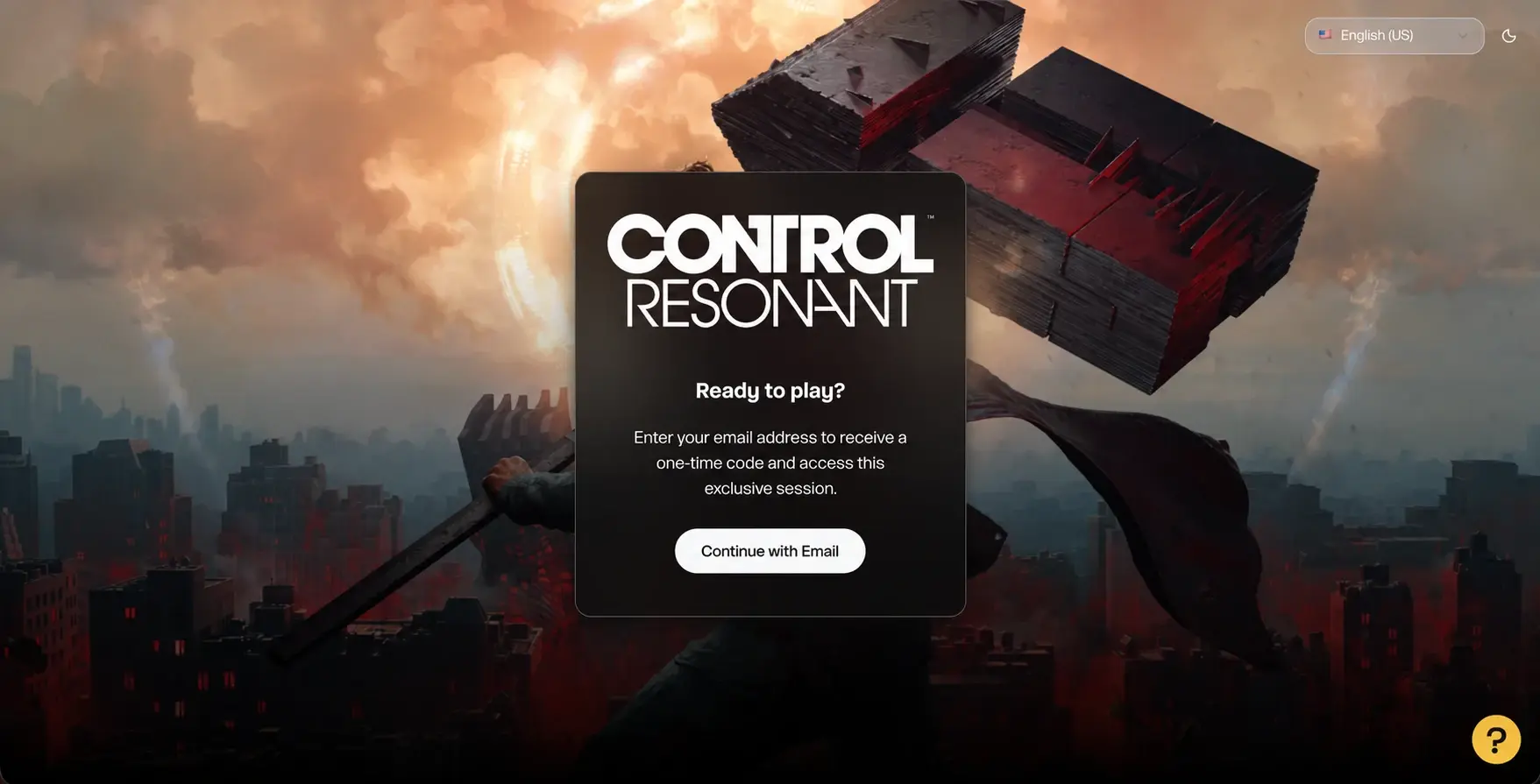
Email-based access to CONTROL Resonant: only eligible participants whose email addresses were on the approved list could join the playtest.
Individual watermarking added traceability to the visible experience. In this operation, the green watermark displayed a user identifier and a session date. Its appearance could be adapted to the operation, and the identifier matched the one used for the player in Remedy’s telemetry.
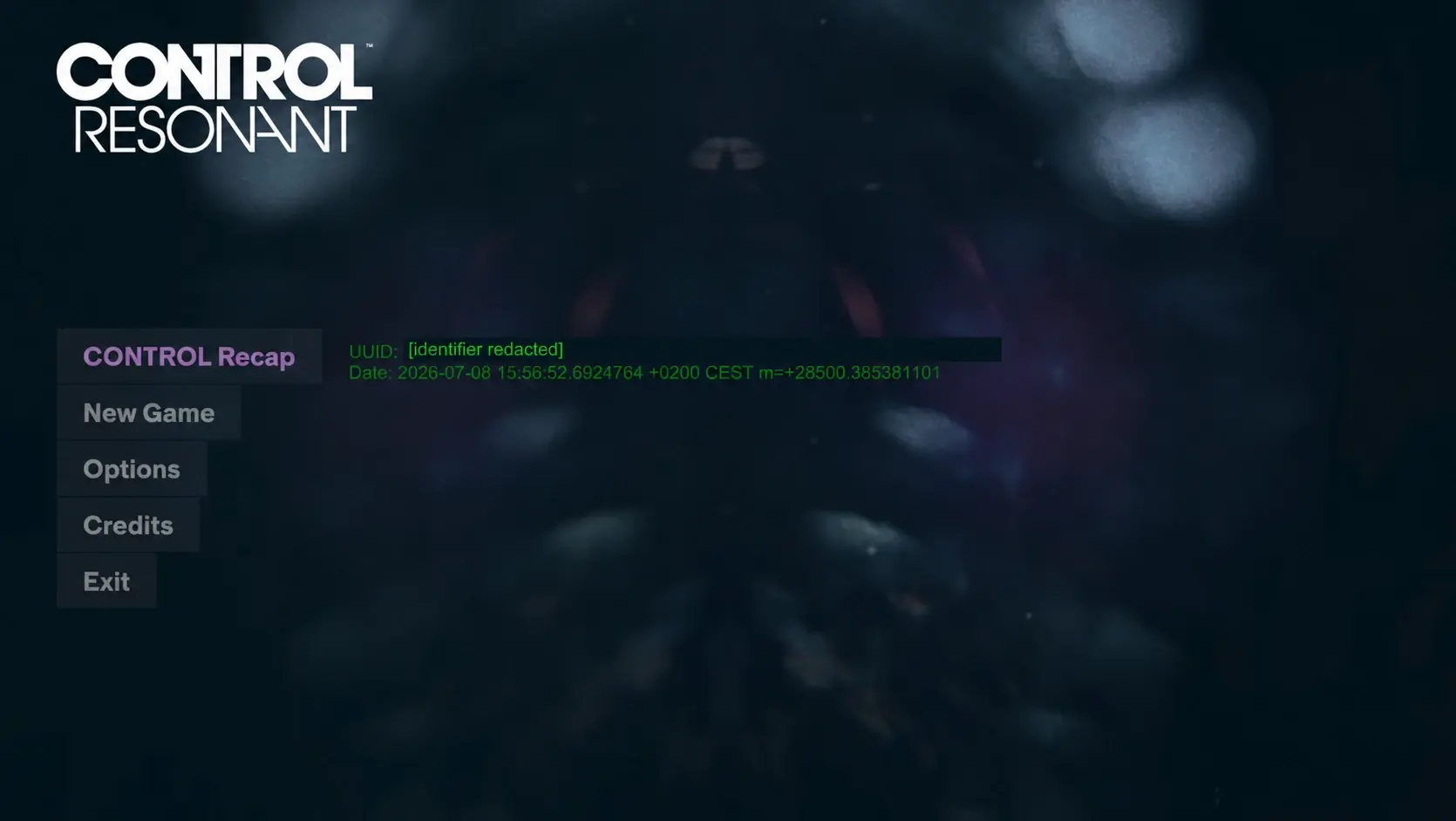
An individual watermark displayed a user identifier and session date within the video stream. The participant identifier is redacted in this image.
Each safeguard had a distinct role. Server-side execution avoided local build distribution, the whitelist and authentication controlled entry, and the watermark supported deterrence and traceability.
Remedy’s User Research team also identified recent advances in AI and the risk of reverse engineering as reasons that reinforced Remedy’s preference for a server-side solution.
→ Keeping the files off participant devices reduces their exposure through local distribution.
Four days to play on a schedule that worked locally
Participants had a four-day access window and an allowance of up to five hours each. They could choose when to play within that window rather than follow one schedule tied to the research team’s time zone.
Persistent saves made that flexibility useful. A participant could stop and return in another session with their progress preserved. Remedy could continue following the same individual across those sessions.
At the end of the experience, participants could open Remedy’s SurveyMonkey questionnaire from the game’s access page. The survey link remained available after the game went offline, so anyone who had not yet responded could still share their feedback.
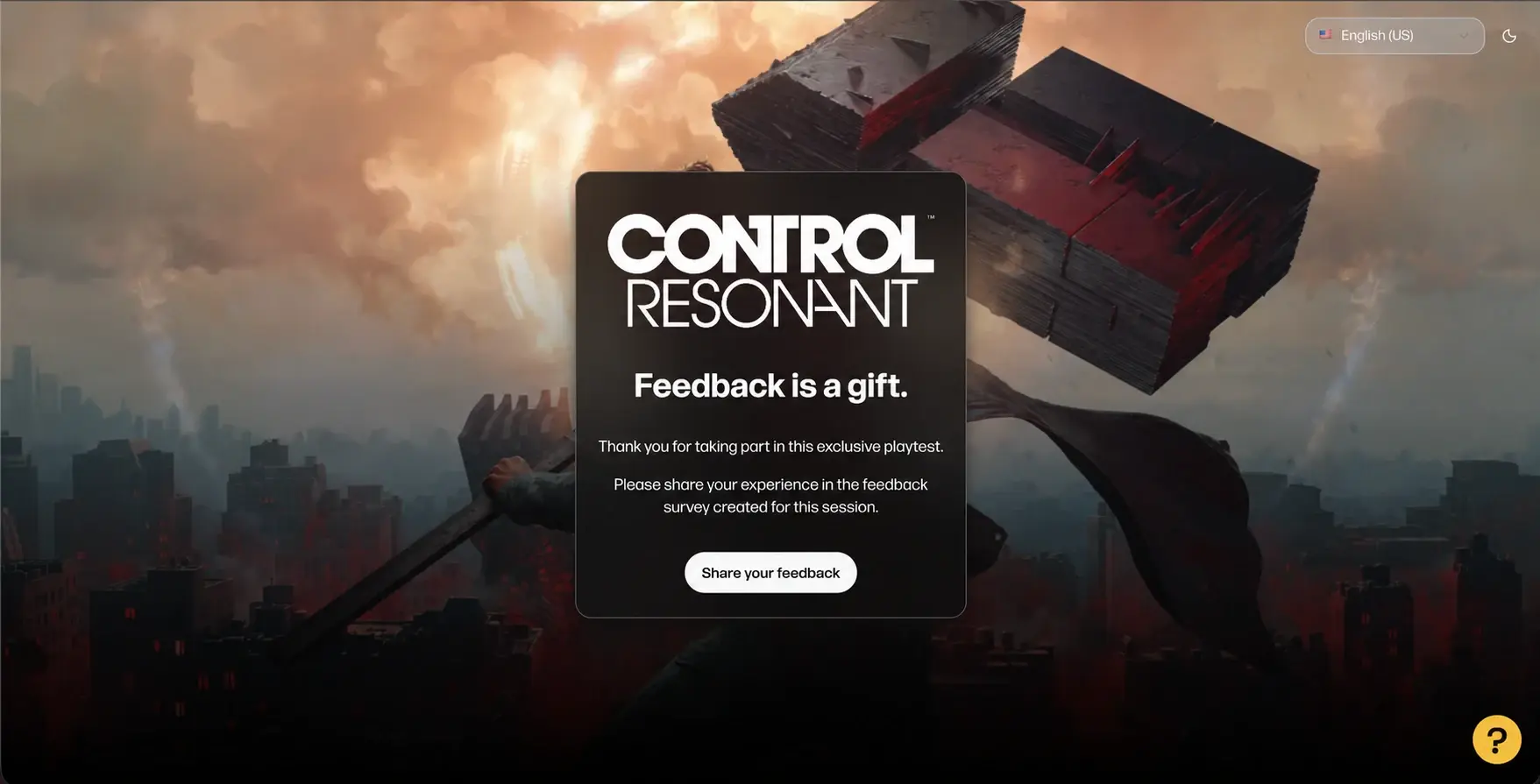
Illustrative post-playtest feedback screen for CONTROL Resonant, thanking participants and inviting them to complete the dedicated survey.
Together, the browser link, saved progression and questionnaire access supported a connected participant journey. The Playruo team worked closely with Remedy throughout setup and the study.
Opening recruitment beyond Windows gaming PCs
Ten percent of participants accessed the CONTROL Resonant playtest from a Mac. Browser streaming let them take part without running the Windows build on their own computer.
The game ran on Playruo’s cloud infrastructure and streamed directly to their browser. Recruitment could therefore focus on the players’ profiles rather than their ability to run the build locally.
→ For a research team, that broadens who can be considered for a study. Participants with a compatible computer, browser, controller and connection can take part without their device having to run the build locally.
Broader eligibility supports the aim of reaching more of the target audience. How well a sample covers that audience still depends on the recruitment criteria, selected participants and research design.
Connecting session context with Remedy’s own telemetry
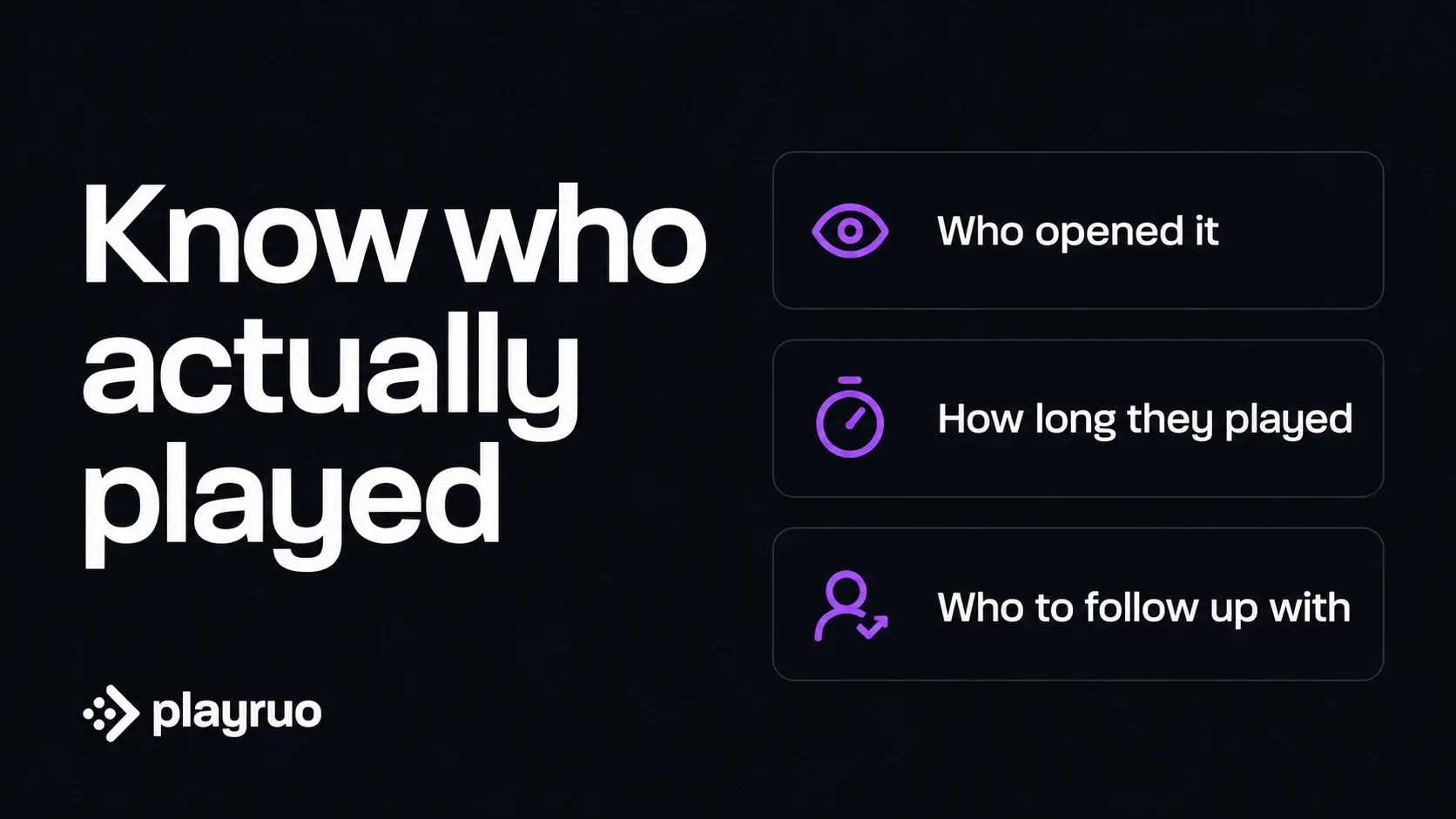
Remedy’s backend already collected in-game telemetry. Playruo added information about access and streaming sessions, with a shared player identifier allowing the two sources to be brought together for analysis.
The two sources answer different questions. Remedy’s telemetry shows what happened inside CONTROL Resonant; Playruo’s session records add the access and streaming context around that behaviour. The shared identifier lets researchers connect those perspectives.
Playruo adds context about the conditions in which participants play: operating system, device, browser, language, session dates and durations, and stream quality. Controller type and model can provide another useful point of comparison where recorded.
Together, these perspectives gave the research team a fuller picture of the player experience: what players did, what they reported and the conditions in which they took part.
Screening participant setups before the playtest
Before selection, every candidate had to complete the Playruo Compatibility Check on the computer and connection they planned to use. Browser support, video decoding, rendering performance and network checks helped Remedy’s User Research team screen for setups suited to the playtest.
The acceptance criteria can be configured for each operation. Each client can set minimum connection-quality thresholds to match the study’s requirements, so candidates are assessed against the conditions chosen for that playtest rather than a single platform-wide standard.
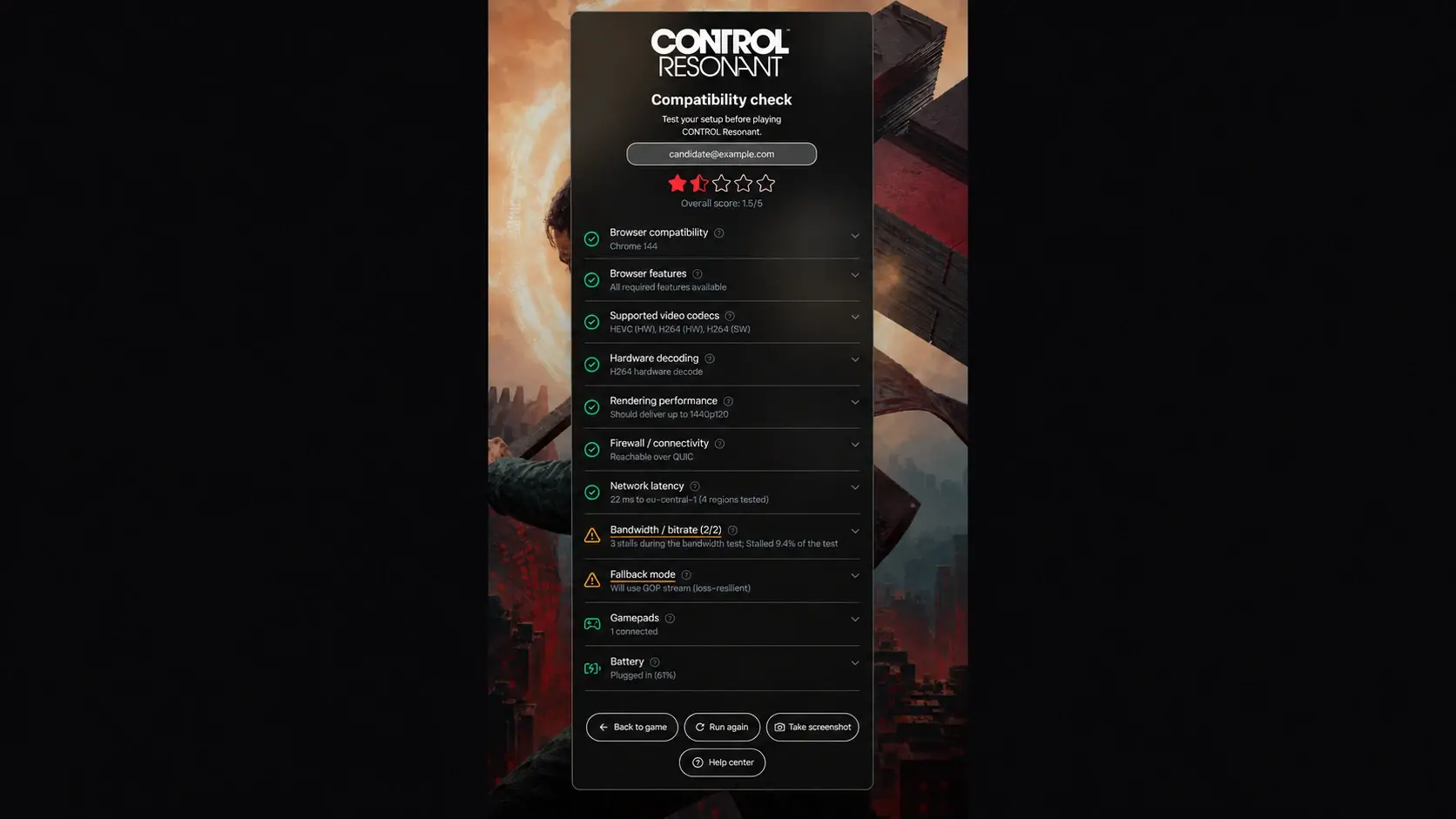
Every candidate must complete a Compatibility Check before selection, helping the User Research team screen for a stable connection and a suitable setup. A standard connection can be sufficient if it consistently meets the stream’s bandwidth and latency requirements. Candidates below the threshold can follow the guidance for each flagged issue and test again.
Playruo’s streaming technology supports resolutions up to 4K and high frame rates, depending on the game, streaming configuration, participant device and connection. The screening process helps researchers select setups suited to the experience planned for each study.
→ Remedy could recruit for the player profiles the study needed, then check their readiness to participate through browser streaming, without requiring a Windows gaming PC.
A clearer understanding of existing friction
The study gave Remedy a clearer understanding of friction points it had already observed in CONTROL Resonant.
The larger study gave the team a way to revisit those questions with players across continents, supported by persistent saves and individual tracking. It complemented the research Remedy had already conducted.
Close support from the Playruo team helped Remedy set up and run the operation. For Remedy’s User Research team, that availability was an important part of the experience, alongside the delivery setup itself.
Building on the study
This CONTROL Resonant operation took place late in development, approximately two months before release. It helped the team revisit specific questions about the player experience at that stage.
Connecting FirstLook recruitment with Playruo delivery
Remedy used FirstLook to manage its playtester panel and invitations. The CONTROL Resonant operation brought the two providers into the same workflow and helped pave the way for the recent FirstLook–Playruo partnership.
Remedy’s User Research team welcomed the idea that its needs had indirectly helped shape an offering for other User Research teams, making similar studies easier to organise and repeat through FirstLook recruitment and Playruo browser delivery.
Exploring playtests at different scales
Alongside asynchronous studies, Playruo’s Control Room provides centralised live session monitoring, letting research teams follow multiple streams and move between participants in one interface. This capability was not used in the CONTROL Resonant study, as the Control Room was still in the final stages of development at the time and was only released in September.
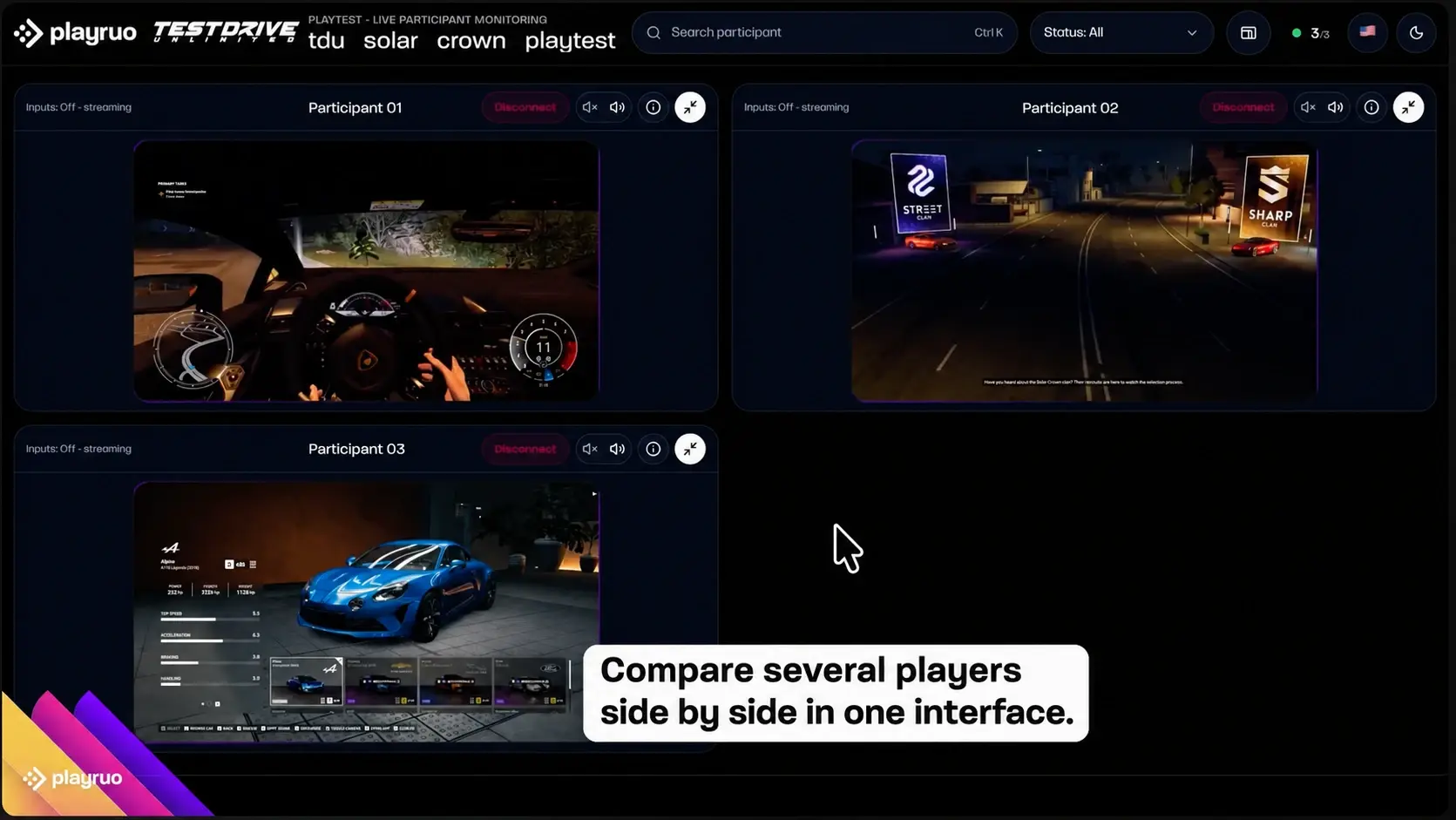
Freshly released, the Playruo Control Room lets researchers monitor live player sessions side by side. It was not yet available during the CONTROL Resonant study and is now ready for upcoming playtests. Demonstrated here with Test Drive Unlimited Solar Crown.
▶ Watch the Control Room walkthrough: compare live player sessions and move between participants.
The Remedy team is enthusiastic about building on this experience with playtests at different scales, from smaller, focused research sessions to broader international studies.
The prospect is to make remote playtesting a more regular part of development, reaching relevant players across markets while keeping build access controlled.
Make playtesting a standard workflow for development and go-to-market
Playruo’s vision is to make playtesting a recurring tool for both improving the game and preparing its go-to-market. From small, early studies with selected participants to larger tests across target markets, teams should be able to learn from different audiences throughout development, then use those findings to guide product decisions, positioning, creative messaging and media planning.
→ Test more often with the audience you expect to reach, and explore relevant players beyond that core.
Playruo-powered playtesting lets teams reach players beyond travelling distance and scale studies on demand, without building and maintaining their own fleet of gaming PCs. Demanding PC builds stay server-side and stream directly to players’ browsers, with resolution options up to 4K. Teams can gather feedback from more players across regions and profiles, without requiring them to own a gaming PC.
→ Use what you learn to improve both the game and the way it reaches players.
With each study designed around a clear question, findings can inform onboarding, mechanics and progression, as well as positioning, creative messaging and media planning.
→ This is Playruo’s vision: a more continuous feedback loop across game development and go-to-market.
Ready to explore what this could look like for your game?
Or email sales@playruo.com.

Related resources
More Playruo resources connected to this story.